
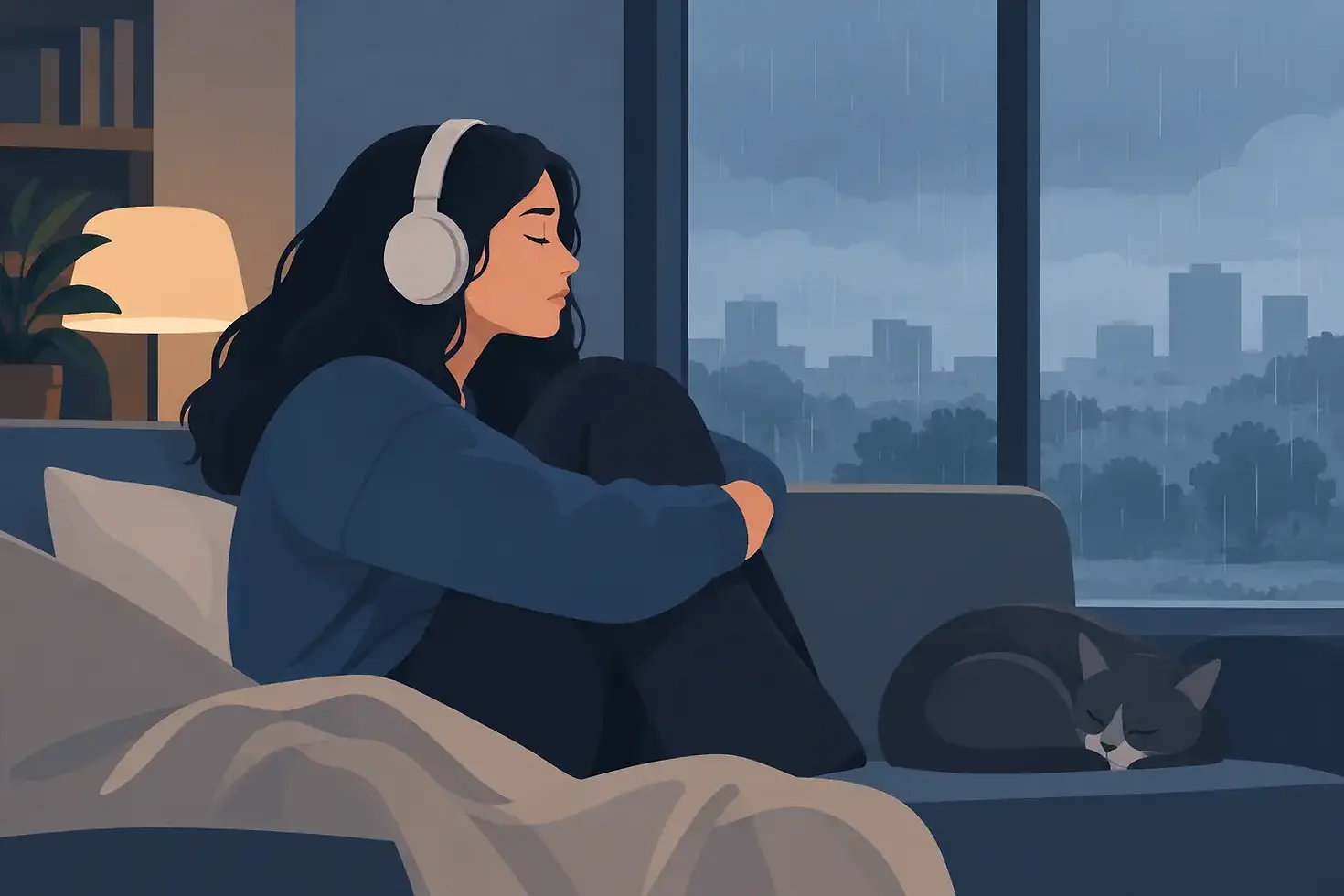
Why Do Sad Songs Comfort Us in Hard Times?

There is a particular kind of quiet that arrives when a sad song says the thing you have not been able to say yourself. You may be driving home after a long day, sitting in an empty house, or remembering someone whose absence still has a place at the table. Why do sad songs comfort us in those moments? Not because they make pain disappear, but because they let pain be seen without asking us to explain it.
A song can hold a feeling steady long enough for us to recognize it. That recognition can be a relief. It reminds us that heartbreak, regret, longing, and loss are not private failures. They are part of being human.
Why Do Sad Songs Comfort the Heart?
Sad music gives emotion a shape. Grief can be scattered and hard to name. It may show up as impatience, fatigue, a sudden memory, or the ache of hearing a familiar voice in your mind. A lyric, a melody, or the grain in a singer's voice can gather those loose pieces into one honest feeling.
That is often the first comfort: the feeling is no longer wandering around without a home.
When a song says, in plain language, that someone is missed or that time moved too quickly, it can feel deeply personal. Yet the song was written for more than one listener. That is the quiet miracle of it. Your story remains your own, but you are no longer carrying it alone.
For people who have loved deeply, this matters. The older we get, the more memories we keep. Some are joyful. Some come with a cost. A sad song does not ask us to choose one or the other. It makes room for the truth that love and loss often sit in the same chair.
It Is Not About Wanting to Feel Worse
At first glance, choosing a sad song when you are already down can seem backwards. If you are hurting, why not play something upbeat and move on? Sometimes an energetic song is exactly what helps. It can lift the room, change the pace of a difficult morning, or give you enough momentum to take the next step.
But forced cheer can also feel lonely when it does not match what is happening inside. If a person is grieving, a bright song may sound like a conversation they are not ready to have. A sad song meets them where they are.
That emotional match can be calming. Psychologists sometimes describe this as emotional validation, but most listeners know it more simply: the music gets it. The song does not rush the listener toward a better mood. It sits beside them for a few minutes.
There is a difference between dwelling in pain and allowing pain to be acknowledged. One can make us feel stuck. The other can help us move through an emotion that has been waiting for attention. The difference depends on the person, the moment, and the song itself.
A Safe Place to Release What We Carry
Sad songs create a contained experience. A song has a beginning, a middle, and an ending. Even when the feeling inside it is heavy, the listener knows the music will resolve, fade, or come to a final note. That structure can make difficult emotions feel more manageable.
A person may cry during a song and feel lighter afterward, not because the loss is solved, but because the tears had somewhere to go. In everyday life, many people hold themselves together for work, family, appointments, and responsibilities. Music can offer a private permission slip to put that strength down for a moment.
The melody matters as much as the lyric. A minor chord, a slow piano figure, a worn-in guitar, or a vocal that breaks just slightly can communicate what ordinary conversation cannot. We hear the emotion in the sound before we fully process the words. That is why a song from a different time, place, or even genre can still find us.
Sometimes the comfort is not in crying at all. It is in sitting still. It is in letting a familiar chorus play while the mind catches up with the heart.
The Difference Between Sadness and Despair
Not all sad listening serves the same purpose. A reflective song can help someone feel understood and connected. But if music repeatedly deepens hopelessness, isolation, or thoughts of self-harm, it may be time to change the soundtrack and reach toward another person for support.
There is no prize for staying in the darkest room. Call a trusted friend, family member, counselor, or crisis resource when the weight feels too great to carry alone. Music can be a companion, but it should not have to do all the work of care.
Sad Songs Protect the Memories We Fear Losing
Many of the songs that stay with us are tied to people and seasons of life. A certain melody can bring back the kitchen where someone used to sing along, a road trip with a person we loved, or the last summer before everything changed. The sadness is real, but so is the gift of remembering.
This is why people return to songs that hurt a little. They are not always chasing pain. Often, they are protecting a connection. Listening becomes a way of saying, “You mattered. That time mattered. I have not forgotten.”
A meaningful song can also give us language for a memory that has outgrown the details. Years later, we may not remember every conversation, but we remember how a song made us feel when someone was still here. Music carries emotional information with unusual strength.
That does not mean we should live only in the past. Memory can become a shelter, but it should not become a locked door. The best sad songs tend to honor what was while leaving a little room for what is still possible.
The Comfort of Being Part of a Larger Story
A well-written sad song is specific enough to feel true and open enough to belong to anyone. The writer may begin with one goodbye, one broken promise, one late-night phone call, or one hard-earned lesson. By the time the listener hears it, the song has become a meeting place.
That shared humanity is powerful. We live through experiences that can make us feel separate from everyone else: losing a parent, watching a child grow up, leaving a relationship, surviving a setback, or realizing that time does not slow down for anyone. Songs remind us that others have stood in those same shadows and found words for them.
This is part of what gives story-first songwriting its lasting value. A strong song does not lecture the listener about how to heal. It tells the truth with enough care that the listener can find their own truth inside it. The most memorable songs are not background noise. They are witnesses.
At Goodwin Made Music, that belief lives in songs about love, memory, resilience, and the fragile value of time. The goal is not to make sadness sound grander than it is. It is to treat real feeling with respect, then leave the listener with something they can carry forward.
When to Let the Song End
There are days when the right song is one that lets you feel the full weight of what happened. There are other days when you need a song that helps you cook dinner, answer the phone, take a walk, or begin again. Both choices can be honest.
Pay attention to what the music is doing in you. If it brings release, remembrance, or a sense of being understood, stay with it. If it pulls you deeper into a place you cannot climb out of, choose something gentler, call someone close, or step outside for a few minutes.
Sad songs comfort us because they do not pretend every hello escapes goodbye, or that every hard season has a simple meaning. They remind us that a tender heart is not a weak one. Sometimes the next small act of healing is simply pressing play, listening all the way through, and allowing yourself to feel less alone.


Comments